Blackjack Cash
Smartplay RewardsBoard
4.81.76K Reviews
- Version
- 2.58
- Installs
- 100.00K
- Age Rating
- Everyone
Screenshots
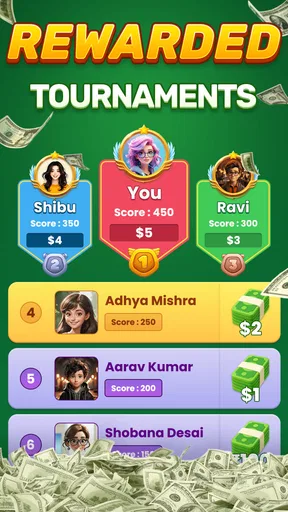

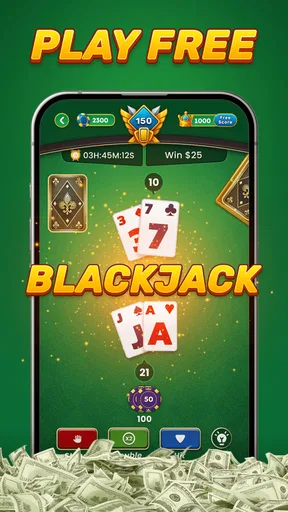
Our Review of Blackjack Cash
 Analysis by Appyee
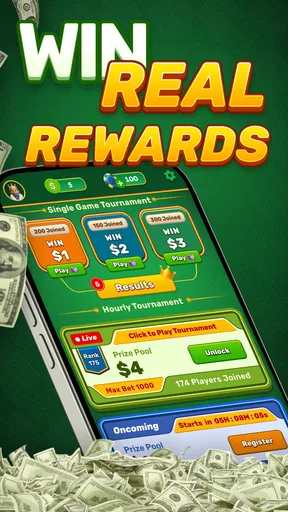
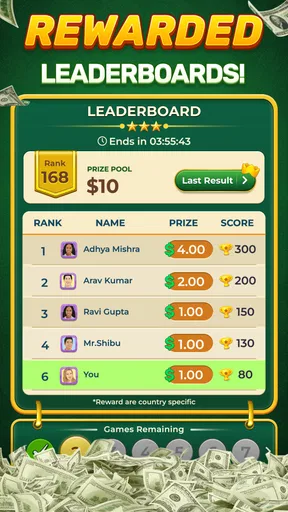
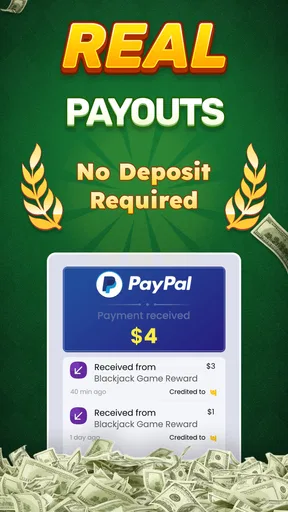
I went into Blackjack Cash expecting a familiar card-table game rather than a large, complicated mobile package, and that is exactly the kind of experience it presents itself as. It is a free board game from Smartplay Rewards built around classic blackjack, with the extra appeal of cash rewards and no deposit in its store summary. That combination makes it more interesting than a basic offline card game, but it also means I would approach it with a little more care than I would bring to a purely casual pastime.
The first thing I noticed is how focused the concept is. You are not downloading a broad casino collection with many unrelated tables competing for attention. The attraction is blackjack, and the relatively direct premise makes it easy to understand what the app is for. If you already know the difference between hitting, standing, and trying to improve a hand without going over, you can get comfortable quickly. If you are new to the game, the familiar rules give you a manageable starting point, although the real-cash angle makes learning responsibly more important.
Its public reception is strong, with a 4.8 average from around 16 thousand ratings and roughly 1.8 thousand written reviews. The game has passed 100 thousand installs, so it is not an obscure experiment with no visible audience. I still would not treat popularity as proof that every session will suit every player. A high rating tells me that many people enjoy the central experience; it does not remove the need to understand how rewards, eligibility, and withdrawals work before investing serious time.
How Blackjack Cash feels in everyday use
I find Blackjack Cash easiest to judge by looking at the small loop that keeps a hand moving: I make a choice, see how it resolves, consider what the reward angle means, then decide whether another round is worth my time. That rhythm can make a short break feel engaging, but it also calls for a pause between hands rather than automatic tapping. The next section looks at how those decisions shape an ordinary session.
A quick start that suits short sessions
For me, the strongest use case is a short break. Blackjack naturally divides into small decisions, so it fits a bus ride, a waiting room, or a few minutes after finishing a task. I would not choose it when I want a long strategic campaign or a rich story. I would choose it when I want a recognizable card game that can be opened, played for a while, and put aside without remembering a complicated world or a long quest line.
The game’s speed expectations are tied to that narrow design. A focused blackjack app should feel lighter and more immediate than a board game that loads several modes, animated maps, or large collections of assets. In my experience, that kind of simplicity is valuable on a phone because the important question is usually whether I can reach the table without unnecessary wandering. The fewer layers between opening the game and making a decision, the better the fit for casual play.
That does not mean every tap will feel identical on every device. Network conditions, background activity, and the phone itself can affect the transition into a session or the handling of reward-related actions. I would judge the game by how consistently it gets me to the next hand, not by expecting every screen to behave like a fully offline calculator. A brief pause is tolerable; uncertainty during a paid or reward-related action is much more serious.
What the blackjack format demands from the player
The main skill is not rapid tapping. It is making a decision with incomplete information and accepting that a sensible choice can still lose. That distinction matters here because the reward framing may tempt some players to interpret every hand as a chance to earn rather than as a game with risk and variance. I found it healthier to treat each round as a separate decision and avoid changing my approach simply because the previous hand went badly.
A useful habit is to decide my stopping point before opening a session. I also keep entertainment and reward expectations separate: if the game is enjoyable without a particular outcome, I am less likely to chase a result. This is one of the less obvious trade-offs of a blackjack app with cash language. The classic rules can be familiar, but the possibility of real rewards changes the emotional weight of ordinary wins and losses.
New players should spend time understanding the table before focusing on rewards. Blackjack strategy is not just guessing whether the next card will be favorable. The dealer’s visible card, the value of the player’s hand, and the risk of busting all matter. Even a simple decision such as standing on a modest total can feel uncomfortable when the dealer’s card looks strong. The app is more suitable for someone willing to learn those basics than for someone hoping to press buttons randomly and receive dependable returns.
Where it differs from ordinary board-game alternatives
Compared with a traditional board game on mobile, this title is more repetitive by design. A chess or checkers app offers a wider range of positions and a longer strategic arc. A solitaire game may be calmer and usually carries less emotional pressure. A social board-game collection may be better when the goal is conversation with friends. Blackjack Cash makes more sense when the player specifically wants the rhythm of individual hands and is comfortable with chance playing a major role.
Compared with a standard blackjack game that uses only fictional chips, the reward-oriented premise is the defining difference. That can make each session feel more purposeful, but it also introduces questions that do not matter in a purely recreational version. Before relying on it, I would read the in-app instructions around eligibility, reward handling, and any conditions attached to earning or redeeming. I would also avoid assuming that “no deposit” means “no rules” or “no limits.” The phrase describes the entry concept, not a promise that every user will have the same path to a reward.
There is another important comparison. A casino-style game with many tables and visual effects may feel more immersive, while this focused option is potentially easier to understand. If you want spectacle, variety, or a simulated casino atmosphere, a broader alternative may be more satisfying. If you want a direct blackjack session without learning several unrelated systems, the narrower design is an advantage.
Heavy-use moments and what I would watch
The busiest moments are likely to come when many players are active at once or when reward-related activity places more demand on the service than an ordinary hand. I cannot responsibly turn that into a measured performance claim, but it is the area where I would pay closest attention. A delayed decorative element is harmless. A delayed confirmation around a balance, result, or reward deserves caution.
My practical workflow would be simple. I would avoid repeatedly tapping when a screen appears slow, wait for the current action to settle, and check the visible result before starting another hand. Repeated taps can create confusion in any interactive game, especially when the connection is not perfectly responsive. I would also keep screenshots or notes of important confirmations for my own records, not because I expect a problem, but because reward-based play benefits from being organized.
Another useful tip is to close unnecessary background apps before a longer session on an older phone. That is not a claim that this game is unusually demanding; it is a sensible way to reduce avoidable interruptions. If the device is already struggling with heat, low storage, or aggressive battery saving, I would not begin a reward-focused session until those conditions improve. The goal is to distinguish a game issue from a phone issue before drawing conclusions.
Stability, interruptions, and recovery
Reliability matters more here than it does in a disposable puzzle because a session can involve a sequence of decisions and a reward context. I look for a clear recovery path after an interruption: reopening the game, returning to the relevant screen, and seeing an unambiguous result. I would feel comfortable continuing only when the current hand or account state is clear. If I were unsure whether an action had registered, I would stop rather than immediately repeat it.
The game’s current version is 2.58, which tells me it is being maintained as a live product rather than presented as a one-time download. That is encouraging, but an updated version does not guarantee perfect stability on every phone. Maintenance can improve compatibility and fix problems, while also making it important to keep the installed version current. I would use the latest available build and restart the app after an unusual freeze before attempting another reward-related action.
Recovery is also affected by expectations. If I play a normal board game and lose a round after reconnecting, I can usually shrug it off. With a cash-oriented game, I need clearer records and more patience. I would not switch networks repeatedly while a result is processing, and I would not uninstall the game as a first response to a confusing screen. First I would note what happened, reopen it, and use the app’s own support or account guidance if the state still looked wrong.
Device constraints and practical comfort
The minimum operating-system requirement is Android 7.1, so the game is aimed at a broad range of Android phones rather than only recent models. That is useful for people with older hardware, although operating-system compatibility is only one part of the experience. Screen responsiveness, available memory, battery condition, and connection quality can still shape how comfortable the game feels.
On a modest phone, I would pay attention to three things: whether the game returns to the table promptly, whether the device heats noticeably during repeated hands, and whether switching briefly to another app causes a session to reset. Those checks are more useful than judging performance from the install alone. A card game does not need the same graphics power as a modern action title, but a reward-based session still benefits from a stable device and an uninterrupted connection.
Storage should be considered in context. The game is not the sort of product I would choose for visual spectacle, so I would expect its core appeal to come from interaction rather than demanding graphics. Even so, a phone with almost no free space can behave unpredictably when installing or updating any app. I would leave room for the operating system and other applications instead of blaming Blackjack Cash for every installation or update problem.
Battery use is another reason I would keep sessions moderate on an older handset. Short rounds make it easy to play longer than intended, especially when the game feels quick. A sensible routine is to use it while the phone is comfortably charged, avoid playing in direct heat, and stop if the device becomes unusually warm. That advice is less about this particular title making a confirmed demand and more about keeping the experience predictable during repeated play.
Who will enjoy it, and who should skip it
I think it is a good match for adults who already enjoy blackjack, want a free way to play on Android, and like the possibility of rewards without making a deposit. It can also suit a curious beginner who is prepared to learn the rules slowly and treat the reward element as secondary. The Everyone content rating describes the listed audience, but the cash-oriented premise still calls for mature judgment about time, expectations, and personal spending habits.
I would recommend skipping it if you dislike chance-based outcomes, need a fully offline game, or want a guaranteed way to make money. It is also not my first choice for someone looking for deep board-game variety, a competitive chess-like experience, or a relaxed solitaire session with no reward pressure. Players who find themselves chasing losses should step away rather than trying to recover through more hands.
For a family looking for a simple shared board game, I would choose something designed around local turns or cooperative play instead. For a learner who wants to master blackjack probabilities without any reward distraction, a conventional practice app may be better. For someone who wants a quick, focused blackjack experience and understands that rewards do not remove uncertainty, this game has a clearer reason to exist.
My performance verdict after weighing the trade-offs
Blackjack Cash is most convincing when I judge it as a focused mobile blackjack game, not as a guaranteed earning tool. Its free entry, familiar rules, broad Android compatibility, and strong public reception make it easy to consider. The developer, Smartplay Rewards, has positioned it around a straightforward card-table idea, and the current release gives it the feel of an actively maintained product rather than an abandoned download.
The performance story is similarly practical. I would expect short hands and a relatively uncomplicated game loop to be friendlier to ordinary phones than graphically heavy board games. I would still keep an eye on connection-dependent moments, avoid repeated taps during delays, and confirm the state of a session after an interruption. Those habits are especially important because the reward context raises the cost of confusion.
My final view is positive but deliberately measured. The best way to use this game is as controlled entertainment with a possible bonus, not as dependable income. If that expectation suits you, the focused format can make a few spare minutes more engaging than a standard fictional-chip table. If you need certainty, offline reliability, rich strategic variety, or guaranteed financial results, another board-game option will serve you better. I would install it for the blackjack experience, set personal limits before playing, and only explore the reward side after understanding the rules that govern it.
Verdict
Strengths of Blackjack Cash
- Simple blackjack rules make it easy for beginners to start playing.
- Quick rounds are convenient for short gaming sessions.
- The interface is generally easy to navigate on mobile screens.
- Different betting options can add variety to each hand.
- Practice-style play can help users learn basic blackjack decisions.
Limitations of Blackjack Cash
- Cash-based play may involve financial risk and encourage overspending.
- Results depend heavily on luck, even when using good strategy.
- Availability and payment options may vary by country or region.
- The game can become repetitive after extended sessions.
- Players should check withdrawal rules and fees before depositing money.
Other Releases by Smartplay Rewards
View All
Ludo Cash - Win Real Rewards
Board4.6
Similar Picks in This Category
View All
Ludo King®
Gametion4.1

Ludo
Yarsa Games4.6

Tile Master® - Matching Game
Higgs Studio3.6

Checkers Online
CC Games4.6

Dominoes
Loop Games4.7

Chess
Chess Prince4.6
Frequently Asked Questions
What is Blackjack Cash, and how does it work?
Blackjack Cash is a mobile blackjack game built around casino-style card tables and quick hands. After installing it, you can choose a table, place virtual bets, and play against the dealer using standard blackjack rules. The exact features may vary by version, so check the in-app description carefully to understand whether the game focuses only on virtual entertainment or includes any reward-related systems.
Can I win real money with Blackjack Cash?
You should not assume that every game called Blackjack Cash offers real-money winnings. Some versions use virtual coins solely for entertainment, while others may advertise rewards, tournaments, or cash-out options subject to eligibility rules. Before depositing money or spending time on the app, review its official terms, supported countries, minimum withdrawal requirements, identity checks, and whether rewards are actually available in your region.
Is Blackjack Cash free to download and play?
Blackjack Cash may be available as a free download, but free installation does not necessarily mean that every feature is free. Games in this category can include optional purchases, advertisements, virtual currency, or betting systems that encourage additional spending. Review the store listing and payment settings before playing, and avoid purchasing credits unless you fully understand what they provide and whether they can be refunded.
Does Blackjack Cash require an internet connection?
An internet connection may be needed for Blackjack Cash to load tables, synchronize your account, display advertisements, process purchases, or access online competitions and reward features. Even if some hands appear to work offline, the app may not save progress or validate results until you reconnect. For the most reliable experience, use a stable connection and avoid playing while switching repeatedly between Wi-Fi and mobile data.
Is Blackjack Cash safe for beginners?
Blackjack Cash can be easy for beginners to understand because the basic objective is to reach a hand value closer to 21 than the dealer without going over. However, users should learn the rules, payout structure, and any spending limits before starting. If the app involves real-money betting or purchasable credits, treat it as gambling, play only where legal, and never spend more than you can afford to lose.
Play our best games!


